


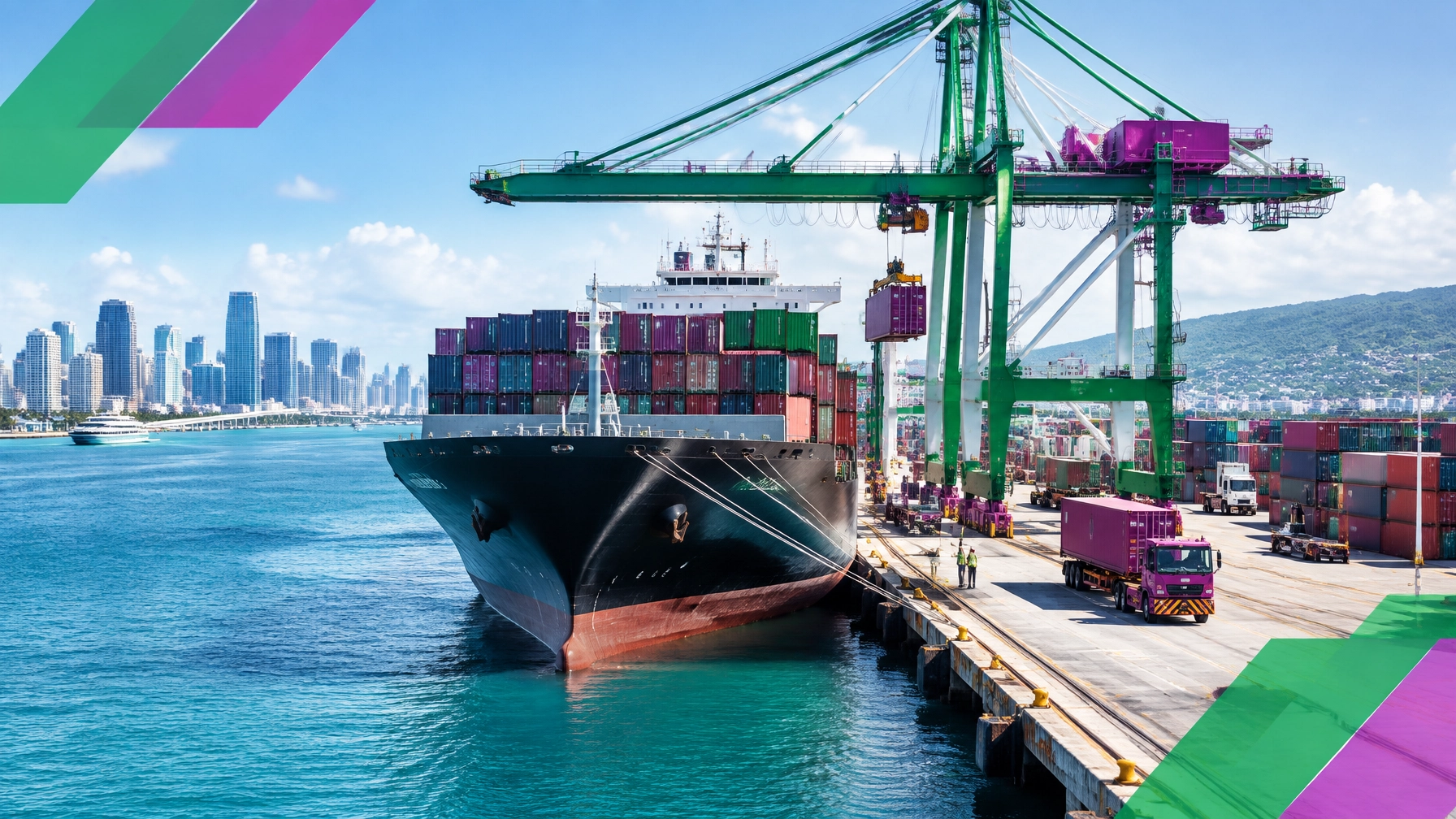


Navigating the bustling trade corridor between the United States and the Caribbean requires meticulous planning, operational precision, and strategic foresight. For operations managers and supply chain directors overseeing freight moving from Florida to Jamaica, controlling landed costs without sacrificing transit speed is a continuous mandate. When executing ocean freight from Miami to Kingston, inefficiencies in container loading, sluggish drayage handoffs, and poorly timed bookings can quickly inflate your operating budget.
By implementing advanced route optimization, refining your container consolidation protocols, and aligning with premier international shipping companies, your organization can achieve significant cost reductions: slashing overall logistics expenditures by up to 20%. At MOR Logistics, our extensive expertise in Jamaican freight empowers businesses to streamline their supply chains from origin to final destination. Through our strategic collaboration with Rule Logistics, our official partner in the USA, we provide a seamless, end-to-end bridge from domestic North American trucking to direct Caribbean ocean shipping.
Mastering the Miami-to-Kingston Trade Lane: Core Operational Realities
The Miami-to-Kingston trade lane is one of the most critical arteries for regional commerce, connecting PortMiami and Port Everglades directly to Port Bustamante in Kingston, Jamaica. Maintaining velocity on this lane depends heavily on choosing direct, non-transshipment services that minimize handling and eliminate unnecessary port delays.
Fast direct ocean services on this route typically require only two to three days on the water. However, the total transit timeline is shaped by your inland drayage efficiency, cargo staging protocols, and documentation accuracy. Relying on fragmented forwarders often leads to missed sailing cut-offs and costly port demurrage.
To future-proof your supply chain, you must treat every link in this chain as an interconnected ecosystem. Leveraging professional ocean freight services with established carrier relationships ensures your cargo secures priority loading on weekly direct sailings, keeping your inventory moving predictably.

Container Consolidation Tactics: Maximizing FCL and LCL Efficiency
One of the most immediate levers for cost reduction lies in how you pack and consolidate your freight. Shipping smaller orders as isolated Less-than-Container Load (LCL) shipments without strategic coordination results in excessive minimum billing and fragmented handling fees.
1. Optimize Your CBM and Pallet Thresholds
- Full Container Load (FCL): Deploy FCL when your weekly volume reaches or exceeds 10 to 15 CBM, or when you can fill approximately 70% to 80% of a 20-foot or 40-foot container. Paying for dedicated box space becomes more economical than LCL rate scaling once you cross this threshold.
- Smart LCL Consolidation: For smaller, recurring shipments, avoid shipping partial orders as they arrive from suppliers. Instead, stage your inventory at a Miami consolidation depot and combine multiple purchase orders into a single consolidated weekly shipment.
2. Leverage North American Staging via Rule Logistics
Effective container consolidation starts long before cargo reaches the marine terminal. When your manufacturing plants or distribution centers are spread across the United States, coordinating timely arrivals into Florida can be complex. Rule Logistics, our trusted USA partner, manages comprehensive domestic trucking, intermodal transport, and regional drayage. By consolidating your US-wide shipments into a unified freight pool managed by Rule Logistics, your cargo arrives at our Miami staging facility precisely synchronized with vessel closing windows.
Timing and Scheduling: Avoiding Surcharges and Peak Congestion
Predictability is the cornerstone of cost containment. In international logistics, reacting to market fluctuations after they occur guarantees higher spot-market rates and penalty surcharges.
- Align with Fixed Weekly Cut-Offs: Establish a rigorous internal calendar where all supplier deliveries arrive at your Miami consolidation point at least five to seven days before the carrier's documentation and cargo cut-offs. This eliminates rush handling fees and ensures compliance with Verified Gross Mass (VGM) regulations.
- Proactive Surcharge Management: Monitor bunker adjustment factors (BAF) and peak season surcharges (PSS) by locking in structured rate agreements with experienced international shipping companies. Proactive forecasting allows you to schedule non-urgent inventory builds during off-peak windows, insulating your operating margins from sudden spot-rate spikes.

The MOR + Rule Logistics Partnership: Seamless End-to-End Execution
Achieving a 20% reduction in shipping costs is rarely about negotiating a single lower freight rate; it is about eliminating hidden operational waste across the entire lifecycle of a shipment. Disjointed handoffs between domestic carriers, export forwarders, ocean lines, and customs brokers introduce friction, delays, and administrative overhead.
By partnering with MOR Logistics, you gain a dedicated partner with specialized mastery in Jamaican freight forwarding and customs brokerage. When paired with Rule Logistics handling your domestic North American transport, the result is an uncompromised, unified supply chain network:
- Single-Source Accountability: From the moment your product leaves your US supplier’s dock via Rule Logistics to its secure delivery in Kingston via MOR Logistics, your shipment is tracked and managed under a unified operational standard.
- Precision Customs Clearance: Our local expertise in Kingston ensures that import documentation, compliance filings, and tariff classifications are executed flawlessly prior to vessel arrival, drastically reducing dwell times and avoiding costly port storage fees.
- Proactive Communication: Our operations teams utilize real-time tracking and transparent status updates, empowering your supply chain directors to manage inventory pipelines with absolute confidence.

Conclusion: Transform Your Caribbean Supply Chain Today
Optimizing the Miami-to-Kingston trade lane demands more than basic booking coordination: it requires a strategic partnership built on reliability, timeliness, and deep regional expertise. By refining your container consolidation practices, synchronizing your domestic and international scheduling, and leveraging the combined strengths of MOR Logistics and Rule Logistics, you can eliminate operational redundancies and achieve meaningful cost savings.
Ready to elevate your ocean freight strategy and cut landed costs across your supply chain? Explore our comprehensive services or contact our logistics experts today to design a customized Miami-to-Kingston optimization plan tailored to your enterprise.
